

Just back from a relaxing getaway or a couple of weeks of annual leave? Are you already fed up with the daily grind? It might just be time for a career change.
Time away from work often gives us the space to assess our career and how it affects our lifestyle and happiness. If returning to work fills you with dread, or you’ve started to realise your career no longer fits the life you want, it may be worth considering a new direction.
Here are some signs that you might be ready for a career change…
You feel easily burnt out
Do you struggle to get out of bed in the morning, worrying about the pile of work that awaits you? Everyone has tiring weeks, but regularly dreading work or feeling drained by your role may be a reason to reassess what isn’t working.
Before deciding to change career completely, consider whether the problem is your profession, your current role or something that could be improved within your existing workplace.
If you’re constantly feeling burnt out, it may be time to consider a different career path.
Many Chippendale School students have already experienced professional success before deciding to pursue a career they find more fulfilling.
You have no time for creativity
A lot of us get energy from pursuing creative activities, but some professions leave little room for creativity or individuality. Over time, that lack of a creative outlet can become frustrating.
If you can’t wait for the weekend to work on your latest design project, perhaps you would enjoy a career where you get to explore your creativity practically every day.
You have a poor work/life balance
Do the demands of your job regularly get in the way of the things that matter most to you? You may be able to address these challenges within your current role, but a long-term work/life imbalance could be a sign that something needs to change.

You constantly complain about your job
“My boss is the worst… Carol took credit for my idea again… No one values how much effort I put in!”
We all complain about work occasionally. But if the same frustrations come up week after week, it may be worth asking whether the problem goes deeper than one bad day.
You’ve lost motivation
Everyone has off days, and nobody gives 100% all the time. But if you’ve lost interest in doing your best work, it may be worth asking why.
You may find that a different career gives you a renewed sense of motivation and greater pride in the work you do.
You keep thinking about another career
Perhaps you’ve started researching different professions, courses or ways to turn a hobby into a career. If you repeatedly find yourself wondering what it would be like to do something different, it may be worth exploring that idea more seriously.
And yes, the fact that you’ve found yourself reading an article about changing career might be another clue.
What should you do next?
It’s all very well deciding to change careers, but what should you do once you’ve made that decision? The last thing you want is to move from one unfulfilling role to another.
You don’t need to make the leap overnight. Start by taking a few practical steps:
- Identify what is no longer working. Think about whether the problem is your current role, workplace or the career itself.
- Decide what you want from your next career. Consider factors such as creativity, flexibility, work-life balance and the type of work you find rewarding.
- Look at your existing skills. Many skills from your current career can transfer into a new profession, including communication, project management, finance and working with clients.
- Research different career options. Find out what the day-to-day work involves, what skills are required and what training routes are available.
- Try your new interest before committing. A short course, workshop or personal project can help you decide whether you would enjoy pursuing it professionally.
- Speak to people who have already changed careers. Their experience can give you a more realistic picture of the opportunities and challenges involved.
- Plan your training and finances. If your new career requires professional training, consider the time, cost and practical steps involved before leaving your current role.
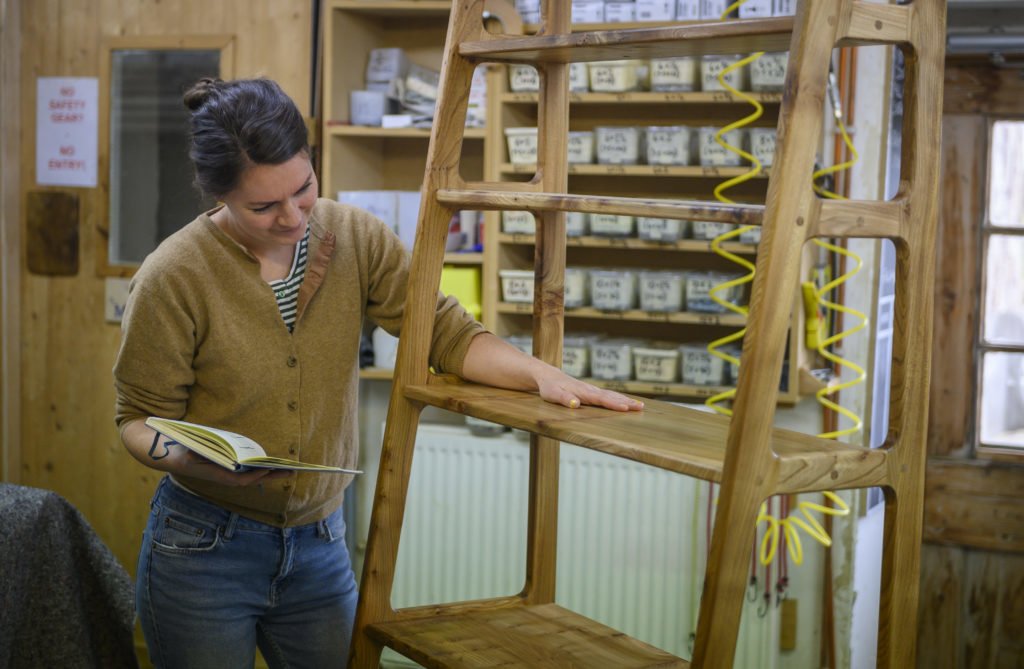
How to start a woodworking career
For people who enjoy practical work, creativity and problem-solving, woodworking can offer a rewarding alternative to office-based work.
A career in woodworking can involve a wide variety of projects, from designing and making furniture to restoration and bespoke commissions. Seeing an idea develop into a finished piece can also bring a real sense of achievement.
Our 30-week Professional Course is designed for people looking to start a career as a furniture maker, restorer or designer. Alongside practical furniture making and restoration skills, the course also introduces the business and marketing knowledge needed to prepare for a professional woodworking career.
Considering pursuing a furniture making career? Discover more about our Professional Course, download a prospectus, or get in touch with a helpful member of our team.