
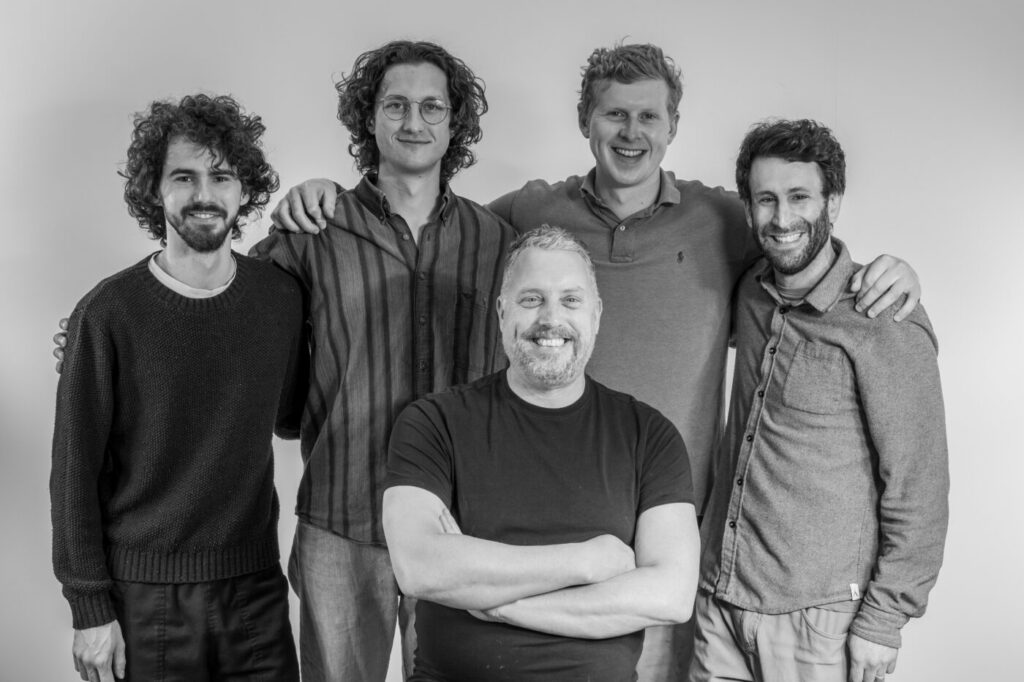
In part two of our Class of 2026 series, we introduce more Chippendale School graduates from the Professional Course, this time from Graham and James’ tutor groups.
Over the course of our 30-week furniture-making course, they explored new techniques, refined their designs and produced final pieces that reflect both technical skill and real individuality.
Graham’s Tutor Group

Aditya Guruprasad
Originally from India, Aditya began his journey with a background in robotics and automation. His early experience taught him how to approach problems methodically, work with accuracy, and turn ideas into practical outcomes through careful planning and execution. These qualities later became highly relevant to his work in furniture making.
Although his background was technical, Aditya always had a strong interest in creative and hands-on work. This led him to explore furniture making, where he found a craft that brought together design, material understanding, and problem-solving. Studying furniture making in Scotland allowed him to connect his engineering mindset with traditional craftsmanship, giving him a new way to create objects that are both functional and visually considered.
Aditya’s approach to furniture is shaped by careful planning, honest construction, and a respect for materials. He believes that good furniture should be well-built, useful, and thoughtfully designed, with care given to both form and function.

Ece Turgut
After graduating with degrees in Business and Psychology, Ece began her career in marketing as a product manager. Over time, she became unhappy in corporate life and decided to pursue woodworking full-time, having long seen it as an important creative outlet.
In 2023, Ece adopted her first rescue dog, followed by a second dog and three cats, which sparked her passion for animal welfare and rescue. Living with multiple animals in a small city apartment highlighted the need for well-designed pet furniture that balances animal comfort with cohesive home aesthetics.
These experiences led her to study at Chippendale with the goal of establishing her own brand, Las Pets. The brand focuses on creating pet-friendly furniture that considers animal behaviour, durability, and everyday living without compromising craftsmanship or a space’s identity.
Through Las Pets, she plans to allocate a portion of future earnings to develop a global platform supporting stray animals in Turkey. She will also continue to share her broader creative work on her personal page, Studio Picori.

Elliot Cochrane
Elliot is originally from Haddington. He graduated with a degree in Sound Design from Edinburgh Napier University before working as a bike mechanic. Although these paths differ, both share a focus on process, precision, and hands-on making.
This connection led Elliot to woodworking, where he found a practice that brings together technical problem-solving and physical craft within the rhythm of the workshop.
Since starting the course at Chippendale, Elliot’s influences have grown to include mid-century modern design, along with elements of Brutalism and the Arts and Crafts movement. His work explores how these styles combine to create furniture that is considered, robust and process-led.
After graduating, Elliot hopes to continue developing his practice in a furniture-making workshop.

Max Panich
Born to a handplane and a bucket of Shellac flakes, Max Panich came into this world for one simple purpose: to learn and keep alive the old methods of cabinetmaking and woodworking. Before following his true calling, young Mr Panich had ambitions of becoming a jeweller or watchmaker.
In the Spring of 2025, Max accepted that jewellery, while interesting, wasn’t the career for him. He enrolled at the Chippendale School, where he flourished into the cabinetmaker he was meant to be. The knowledge he gained from his short time at the Glasgow School of Art, along with his attention to detail, can be seen in the furniture he has made on the course.
In the future, he hopes to open his own cabinetmaking workshop where he will specialise, but not limit himself to making furniture inspired by designs from the 17th, 18th, and 19th centuries. He also wants to explore toolmaking, a field he developed a taste for at Chippendale. Simply put, Max is happy and doing what he loves.

Shaun Scales
Shaun studied Industrial and Three-Dimensional Design at university and began his career designing bars, nightclubs, and retail outlets. After the 2004 Asian Tsunami, he volunteered in Sri Lanka, managing relief and construction programs for displaced communities. What started as a short-term commitment became a long-term path after he met his future wife, Carolina, and joined the Norwegian Refugee Council (NRC) as an Emergency Coordinator.
He continued to apply his design and project management skills by planning and implementing emergency relief operations with the NRC and the UN Refugee Agency (UNHCR) in disaster and conflict zones worldwide.
When not deployed overseas, Shaun maintained and developed his practical skills by renovating several properties, most recently a Victorian-era Coastguard House on the Cornish coast. “Arriving back in the UK after a prolonged deployment overseas was always something of a transition, and I loved to ground myself in a building, making or renovating a project when I returned home. I often imagined doing something workshop-based after my humanitarian career, and I started to explore options to further professionalise my skillset.”
Upon completing the course, he plans to open a furniture workshop in Athens, Greece, where he and his family are currently based.
James’ Tutor Group

Eric Moutal
Eric has always been drawn to working with his hands and solving problems. From an aircraft mechanic on float planes in Northern Canada to earning a degree in Mechanical Engineering, to a decade as a craft brewer, his varied career is built on technical aptitude, with each step seeking greater creative freedom.
This path led him to furniture making and the Chippendale School, where his technical problem-solving and attention to detail started the creation of pieces that embrace local, natural products and respond to the inherent variability of wood. Eric’s designs are understated with intention, inviting you to touch them and revealing subtle complexity the longer you look.
Upon graduation, he intends to return home to Vancouver, Canada and establish a business making custom furniture to bring joy and a touch of whimsy into people’s homes and lives.

Igal Nosovitski
While studying philosophy and human sciences at university, Igal became increasingly drawn to traditional craftsmanship, particularly woodworking. What began as curiosity grew into a deep interest in material, form, and making inspired objects that can live alongside people for decades.
He was especially drawn to the honesty and individuality of wood and the intersection of craftsmanship, everyday utility, and personal expression. For Igal, working with timber is not just about shaping an object but about understanding the material’s inherent qualities to create pieces that are thoughtful, durable, and reflective of the person who lives with them.
This path led him to Chippendale, where he has spent the past year refining an approach grounded in fine cabinetmaking, precise design, and a more considered way of working with organic materials.
Following graduation, Igal plans to establish his bespoke furniture practice in Israel under the name “ets”. The name, translating from Hebrew as both “wood” and “tree”, refers to the simplicity and fundamental nature of the medium, beneath whose outward restraint lie depth and character. Through ets, he aims to contribute to a culture where furniture is viewed not as a mass-produced commodity but as an enduring, personal object born from a genuine dialogue between material, maker, and user.

Michael Wendt
Born and raised just outside Salt Lake City, Michael developed a deep appreciation for Utah’s natural beauty through hiking, skiing, and time spent outdoors. That connection to the landscape continues to shape both the philosophy and craftsmanship behind his woodworking practice.
An early introduction to the craft came from watching his grandfather work from a backyard woodshop, sparking a lifelong fascination with woodworking and the value of making things by hand. Today, that influence is paired with a strong commitment to sustainability and thoughtful design. In response to the environmental impact of the fast-furniture industry, Michael creates environmentally conscious pieces built not only to endure, but to grow richer and more beautiful with age.
Inspired by the culture and artistry of growing, making, and ageing wine, Michael founded Grand Cru Furniture, a name that reflects an appreciation for patience, character, and craftsmanship over time. With plans to return to Utah to establish the business there, Grand Cru represents a blend of natural inspiration, traditional craft, and enduring design.

Rory Stewart
Rory grew up on a farm in rural Scotland and in a family that was fanatic about trees. He has been immersed in the outdoors and in working with his hands from a young age, which has sparked his love for the craft. The experiences on the farm, in the woods with a chainsaw, and in the school workshops ignited a love and passion for design and making.
Prior to arriving at the furniture school, Rory had worked in a professional workshop as a bench-hand assistant and a labourer for a joinery company. He took a huge amount from these jobs and will draw on these experiences in the future.
Rory’s work is influenced by the minimalism, clean lines, and fine craftsmanship of Japanese and Scandinavian design styles. He takes care selecting timber for clients and finds joy working with local hardwoods. Looking ahead, Rory plans to work for a London-based furniture maker and be part of a team creating inspiring and visionary projects.
Interested in attending the 2026 Graduate Exhibition and Fine Furniture Sale? Book your free ticket here.